Repair TipsLocal Guides
How Tree Roots Get Into Drain Lines
Tree roots enter drain lines through hairline cracks, loose joints, and condensation on pipe walls, then swell inside the pipe until your Bradenton home backs up.
Tree roots get into drain lines through the smallest opening they can find - a hairline crack, a loose joint, or a gap where the pipe meets a fitting - and they find those openings because your sewer line is the most reliable source of water and nutrients in the yard. A root tip thinner than a human hair squeezes through, then swells inside the pipe until it catches toilet paper, grease, and hair, and that is when your Bradenton home backs up. The rest of this post covers why our soil and trees make this so common here, the warning signs to watch for, and how we clear and prevent root intrusion.
The Short Answer: How Roots Find Your Pipes
Roots do not seek out pipes on purpose. They grow toward moisture and oxygen, and a sewer line leaking a few drops a minute creates a damp pocket in the soil that roots detect and follow.
Once a root reaches the pipe, it only needs 1/32 of an inch of space to enter. Clay tile and cast iron lines - common in Bradenton homes built before 1980 - are the easiest targets because their joints shift with our soil. PVC holds up better, but a bad glue joint or a crack from a settling slab still opens the door.
Inside the pipe, the root feeds on everything you send down the drain. It branches, thickens, and within one or two growing seasons it can reduce a 4-inch line to a trickle.
Why Tree Roots Grow Into Drain Lines in Bradenton
Tree root intrusion in sewer pipes Bradenton is worse than in most of Florida because of three local conditions: sandy soil, year-round growth, and mature landscaping planted too close to the sewer lateral.
Our sandy soil drains fast, so roots have to spread wide to find water. A live oak's root system can stretch two to three times the width of its canopy, which means a 40-foot oak in the front yard is likely reaching your line even if the trunk sits 30 feet away.
We also do not get a hard freeze. Roots here grow 12 months a year instead of pausing for winter, so an intrusion that starts in March is a full blockage by August.
Older neighborhoods feel this hardest. In Drain Cleaning in Downtown Bradenton, the housing stock dates to the 1920s through the 1960s, and much of the sewer lateral is original clay tile. Those pipes have 60 to 100 years of root pressure on them. Newer construction out toward Drain Cleaning in Lakewood Ranch deals with a different version of the same problem - irrigation-hungry roots from freshly planted palms and oaks pushing into PVC joints that have not fully settled.
The trees we see in lines most often around here: live oak, laurel oak, banyan, ficus, magnolia, and cabbage palm. Ficus is the worst offender. Its roots are aggressive, shallow, and relentless.
Warning Signs You Have Tree Roots in Sewer Lines
Tree roots in sewer lines Bradenton FL rarely announce themselves with a flood. They give you weeks of smaller warnings first, and catching those saves you a sewage backup.
- Slow drains throughout the house. One slow sink is a local clog. Every drain draining slowly at once points to the main line.
- Gurgling toilets. When you run the washing machine or shower, the toilet gurgles because air is being pulled through a partially blocked pipe.
- Sewage smell in the yard or house. A whiff of sulfur near the cleanout or in a bathroom you rarely use is a strong signal.
- Soggy patch in the lawn. A strip of grass that stays green and wet when everything else is dry usually sits right over the break.
- Backups that clear themselves. Water rises, then drains slowly on its own. That is a root ball acting like a check valve.
- Fruit flies or roaches near a floor drain. Organic matter backing up feeds them.
If you see two or more of these at the same time, stop running water and get the line looked at. A camera inspection takes about 30 minutes and tells you exactly where the root mass sits and how bad the pipe damage is.
Can Tree Roots Really Break Drain Pipes in Bradenton FL?
Yes - roots break pipes, and they do it in two stages. First they exploit an existing weakness. Then they widen it.
A root hair enters a hairline crack. As the root thickens, it wedges the crack open. In clay tile, that means the joint separates and the pipe shifts. In cast iron, the root pressure accelerates the rust that is already eating the pipe wall from the inside. By the time you call us, we often find a 4-inch line that has become a 2-inch opening with a root mass the size of a softball.
The repair depends on the damage. If the pipe is cracked or collapsed over a short run, drain pipe repair Bradenton FL is the fix - we cut out the damaged section and replace it with PVC. If the pipe is intact and the root is just an intruder, we clear it and you may never need a repair.
What you cannot do is ignore it. A root that is cut but not removed grows back thicker. A root that is left alone will eventually crush a clay tile line entirely, and that is a trench, a permit, and a five-figure repair instead of a few hundred dollars of cleaning.
How We Remove Tree Roots From Drain Lines
Tree root removal from drain lines Bradenton FL starts with a camera, not a cable. We need to see the size of the root mass, the pipe material, and whether the pipe is still structurally sound before we choose a tool.
From there, the job usually goes one of two ways:
- Drain snaking and cabling. A steel cutting head spins through the line and slices the roots into pieces that flush away. This is the right call for light to moderate root intrusion in a sound pipe. A typical main line takes 45 to 90 minutes.
- Hydro jetting. A 4,000 PSI jetter scours the pipe wall and flushes the debris out. This is what we use when roots have collected grease and scale behind them, or when the line is more than 50% blocked. It leaves the pipe closer to its original diameter than cabling alone.
For heavy, recurring intrusion - the kind where we are back every 12 months - we recommend a rooter service schedule or a permanent fix like pipe lining. If the line has no cleanout access, we install one first so future service is faster and cheaper. You can read more about that on our sewer cleanout installation Bradenton FL page.
After we clear the line, we run the camera again. If the pipe is cracked, we tell you then and there. If it is clean, you are done.
How to Prevent Tree Roots From Entering Drain Lines
Prevent tree roots from entering drain lines Bradenton by controlling what grows near the sewer lateral and by keeping the pipe itself in good shape. There is no chemical that kills roots in a sewer line without also damaging the pipe or the tree, so prevention is about access and maintenance.
- Know where your lateral runs. It usually exits the house at the cleanout and runs to the city main. Do not plant anything within 10 feet of that path.
- Choose the right species. If you are landscaping over or near the line, stick with slow-growing, non-aggressive root systems. Avoid ficus, willow, and banyan within 20 feet.
- Schedule a camera inspection every 18 to 24 months if you have mature oaks or clay tile pipe. Catching a root at 10% blockage costs far less than catching it at 90%.
- Fix leaks immediately. A dripping joint is an invitation. Repairing it removes the water source the roots were following.
- Do not flush grease, wipes, or paper towels. Roots catch debris. The less debris, the slower the blockage forms.
If you already know you have root intrusion and want it handled before it becomes an emergency, our rooter service Bradenton team can clear the line and set you up on a maintenance schedule that fits your trees and your budget.
Common Mistakes Homeowners Make With Root Intrusion
The most expensive mistake is treating a root blockage like a normal clog. Store-bought drain cleaner does nothing to a root mass. It sits in the pipe, corrodes the walls, and by the time you call us the line is worse than it was.
Other mistakes we see weekly:
- Using a hand auger on a main line. You cannot reach the root, and you risk breaking the cable inside the pipe.
- Cutting the root and stopping there. The root regrows from the same point, thicker, within a season.
- Pouring root killer down the drain. Copper sulfate products are hard on cast iron and clay, and they do not remove the root - they just kill the visible part.
- Ignoring a slow drain because "it still drains." A half-blocked line is a fully blocked line with a timeline.
- Planting a tree over the lateral after a repair. We have seen this undo a $4,000 repair in under three years.
If you have already tried a chemical or a hand snake and the drain is still slow, stop. You are likely pushing the root ball deeper and packing it tighter.
When to Call a Professional
Call us when you have two or more slow drains, a gurgling toilet, or a sewage smell you cannot trace. Those are the signs that the main line - not a fixture trap - is the problem.
Call immediately if sewage is backing up into a tub or shower. That is a full blockage, and every gallon you run makes the cleanup worse.
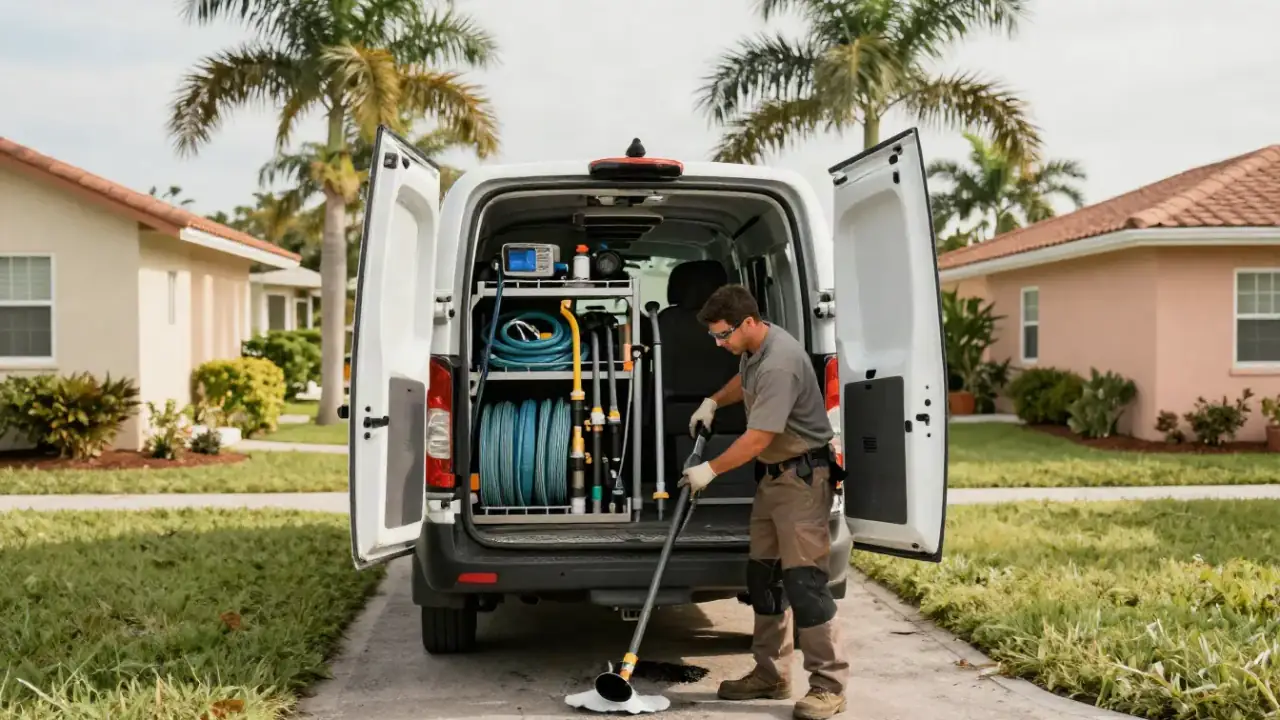
We handle tree root removal from drains Bradenton as a same-day service in most cases. Our technicians arrive with a camera and a cable machine on the truck, so we can diagnose and clear in one visit instead of two. If the line needs a repair or a cleanout, we tell you the price before we start.
Frequently Asked Questions
How do tree roots get into drain lines in Bradenton?
Roots follow moisture to a crack, loose joint, or fitting gap in the pipe, then enter through openings as small as 1/32 of an inch. Bradenton's sandy soil and year-round growing season let roots spread wide and grow continuously, so intrusion happens faster here than in colder climates.
Can tree roots really break drain pipes in Bradenton FL?
Yes. Roots enter a hairline crack, thicken, and wedge the pipe open. In clay tile they separate joints; in cast iron they accelerate rust. A root mass the size of a softball can reduce a 4-inch line to a trickle within two growing seasons.
How to prevent tree roots in sewer lines in Bradenton?
Keep trees at least 10 feet from the lateral, avoid ficus and willow near the line, fix leaks promptly, and get a camera inspection every 18 to 24 months. There is no safe chemical that removes roots without harming the pipe or the tree.
What to do if tree roots clog your drain in Bradenton?
Stop running water, do not use chemical drain cleaner, and call a drain cleaning company with a camera and cable machine. We clear the root, flush the debris, and re-inspect the pipe the same day. Typical 2026 pricing for a main line root clearing in Bradenton runs $250 to $600 depending on access and blockage severity.
How often do roots come back after clearing?
If the root is fully cut and flushed, most lines stay clear 12 to 24 months. If the pipe has an open crack or separated joint, roots return faster - usually within 6 to 12 months - and that is when we recommend a permanent repair or annual maintenance.
Get Help With Drain Cleaning in Bradenton
If your drains are slow, gurgling, or backing up, the root is not going to clear itself. We run a camera, cut the root, flush the line, and show you what we found before we leave.
Call Bradenton Drain Cleaning at (941) 393-1128 for same-day rooter service and Drain Cleaning Bradenton FL across Manatee County.